De-Prioritizing

When I am overwhelmed, I reduce my priorities. I have tried this, and it works every single time.

By de-prioritizing, I declutter my mind and unburden it of multiple tasks. On days I feel tired, my temperament does not support stretching my mind in multiple directions.

De-prioritizing saves me from the anxiety created by unfinished tasks and allows me to focus on a select few tasks.

The stripped-down list is comforting because I consciously de-prioritized.

Why conscious de-prioritization? Because when we do it consciously, it wires our brain to believe that the selected tasks match our energy levels, and once we complete them efficiently, we have lived a resourceful day.

One counterargument is that we should refrain from giving in to mood swings. But this adversely affects productivity because an anxious mind cannot deliver.

By de-prioritizing, I choose to tackle a few tasks efficiently, which also helps prevent procrastination from ruining the next day.

Otherwise, the overwhelm-induced paralysis can push people into an endless loop of procrastination and delay.

Memories are Ordinary!

As a child, I looked forward to visiting my maternal grandmother’s (Nani’s) house with great excitement. A stay at Nani’s house meant a few days away from the usual routine and, more importantly, uninterrupted time with my cousins.

At Nani’s house, we had our own little routine: visiting the nearby church, going to the library, finding books that caught our fancy, and cleverly hiding them somewhere so we could come back the next day and read.

And then there was the Ramakrishna Math, right in the lane next to my grandmother’s house.

We would wander into its beautiful garden without any particular agenda. There was a little artificial pond with a small bridge across it. We would stand on the bridge, peering into the water, watching the tiny fish move around. Somewhere, in the garden, stood a large Champa tree.

About three decades ago, when malls, bowling alleys, gaming zones, and pool tables were not part of our vocabulary, this was what cousin time looked like.

You may wonder — what was so exciting about all of this?

Nothing, really.

And perhaps, that was the excitement.

It was about spending time together, with no adult supervision, no fixed plans, and simply doing nothing.

Yesterday, completely unexpectedly, I took a short trip down that memory lane.

I was walking through the landscaped garden in my society when a fragrance stopped me in my tracks. It was familiar, yet so distant, I couldn’t immediately place it.

I paused and looked around.

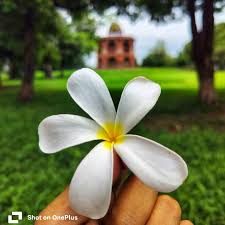
There it was — a white frangipani, or Champa, with smooth, delicate white petals and a deep yellow centre.

And suddenly, it all came rushing back.

The large Champa tree at the Math. The flowers scattered across the lawn underneath it. And our little competition to see who could collect the most fallen flowers.

We carefully picked them up, counted them, and proudly declared a winner.

It was such a small thing. Yet, decades later, one fallen Champa flower in another garden brought that entire childhood back in a flash.

The place was different. The people were not around. The years had passed.

But the fragrance remembered.

It reminded me of something I often forget as an adult — that some of our most precious memories are not created during extraordinary moments. Memories are created in ordinary places, while doing ordinary things, with people who make those moments special.

And sometimes, all it takes to revisit them is one familiar fragrance.

Weather-inspired!!!

Weather -inspired, learning from nature!!!

Rain symbolizes satiation and growth. The essence of this season is the ‘fullness’ of water bodies and vegetation as it blooms effortlessly.

We momentarily forget about the lack in our lives because the surroundings are not struggling, parched, and dull. Our life situation is the same, but the weather brings along a sense of abundance.

The constant sound of the falling rain soothes the nervous system, and the drizzle subtly heals the mind, telling us that all is good. When we see through the rain, the world appears faded, allowing us to go within.

The cancellations and early call-offs are a signal to pause, stay homebound, and appreciate nature as it is. The happiest are the kids because they are fascinated with the thought of getting wet in the rain showers; their enthusiasm is contagious, leaving adults desiring the same.

The heavy grey clouds moving in the sky are overflowing, yet scatter rain with random showers here and there because nature does not attempt to determine the worth of individuals.

The neighbourhood is bathed clean and refreshed because what we need is not a complete upgrade, but rather a balance between what was and what will be.

The sun is out there just as always, but chooses to step back and behind, letting the season take over, clearly telling us that life is never whole but lived in phases.

The worms seen in the rain have been there all along, but they crawl out because they know it’s their time of year. While we might feel big and strong in front of them, the very rains responsible for getting them out of their wormholes make us feel powerless in the face of floods that sweep an entire existence away.

Many hate the season, but it comes in full flare anyway because humans are a small subsect of the larger Universe and cannot decide for all the other elements.

Poets, creators, and writers like me experience enlightenment when they feel the moisture-laden breeze, carrying an exciting possibility of newness. 

Rain is nature’s way of preaching harmony and balance.

A True Traveler’s Spirit

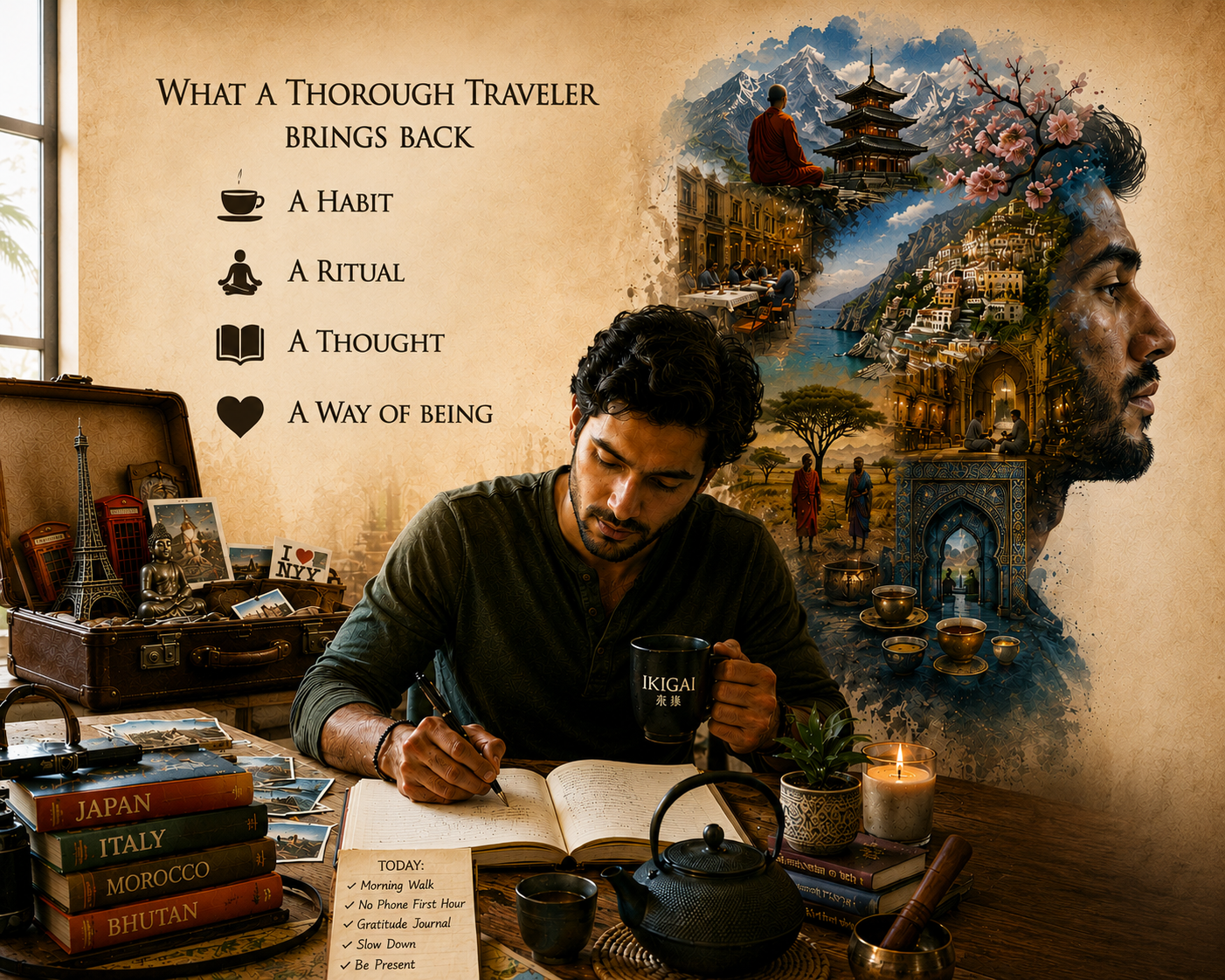
A thorough traveler carries a part of the place he visited along with him back home. He sees, feels, absorbs, retains, and replicates once back home. He doesn’t pin things on history, infrastructure, weather, or government.

As we bring back the small in the form of souvenirs or keepsakes, he brings back that which he can follow at an individual level. Through that habit, ritual, or thought, the country he visited continues to live within him.

And as he travels more and more, his mind becomes a culmination of the many places he has visited.

So travel, my dear friend; let your personality acquire a unique shade, both tainted and painted with global hues.

P.S: A heartfelt note after my summer trip to Japan.

𝗙𝗲𝗲𝗹 𝗚𝗼𝗼𝗱 𝗣𝗼𝘀𝘁 𝗔𝗹𝗲𝗿𝘁!!!

I recently visited Malabar Hills, Mumbai. Once I was done with my meeting, I sat on a bench installed on the recently opened glass viewing deck. The sun had set, and the cold breeze made me momentarily forget that it was summer.

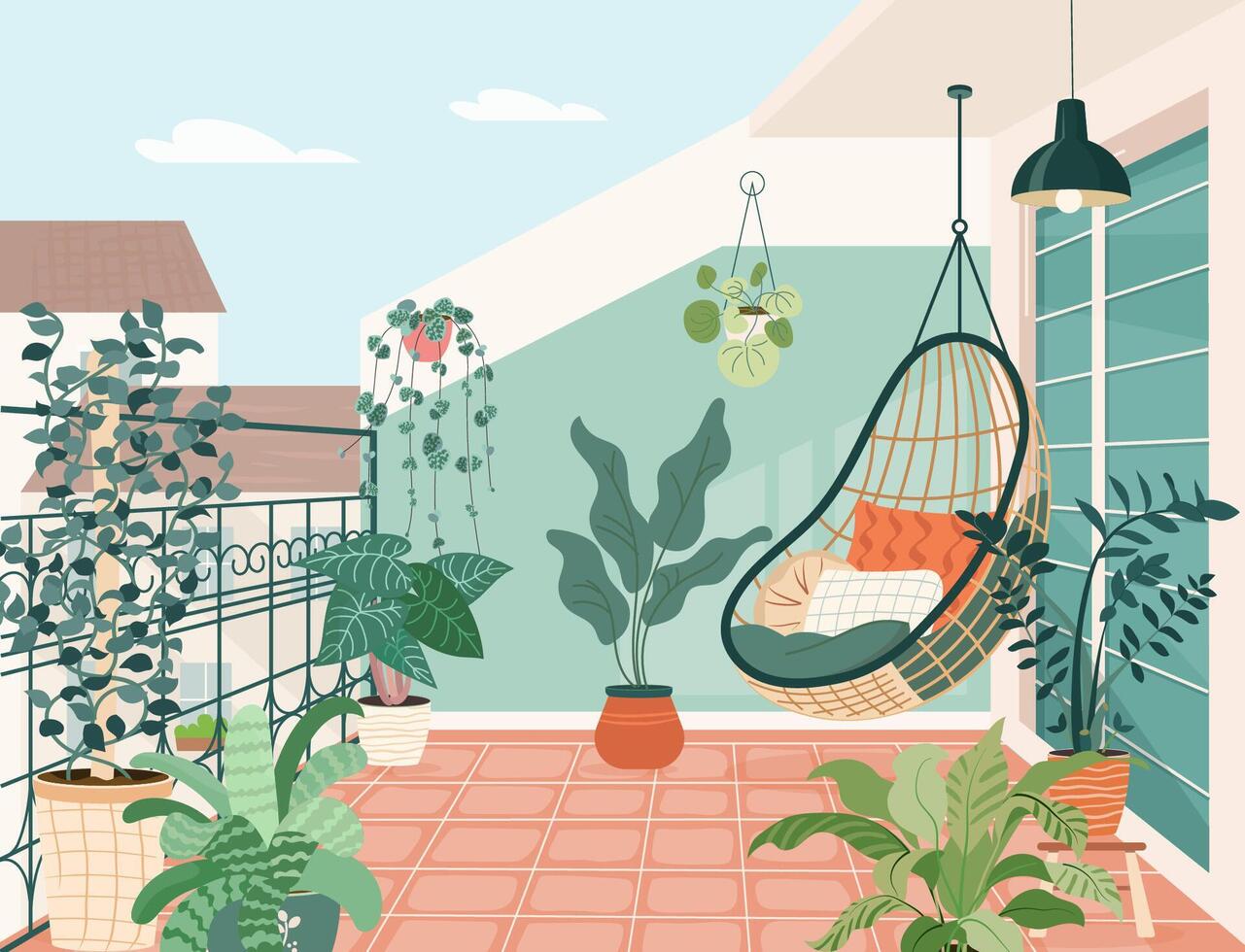
As I gazed at the horizon and back, I noticed a 3 storeyed building, nestled comfortably between the growing number of skyscrapers. My eyes fell on the balcony of a house on the 2nd floor. The resident had hung fairy lights, kept beautiful plants, and had some cozy cane furniture to relax.

The setup was so inviting that the penthouses and luxurious lobbies of the modern infrastructure lost their lustre in front of this simple DIY balcony in an approximately 3-decade-old structure.

This reminded me of something that I had read in ‘The Monk Who Sold His Ferrari by Robin Sharma –

“𝗕𝗮𝘀𝗶𝗰𝗮𝗹𝗹𝘆, 𝗶𝘁 𝗶𝘀 𝗮 𝗽𝗹𝗮𝗰𝗲 𝘁𝗵𝗮𝘁 𝘄𝗶𝗹𝗹 𝗯𝗲𝗰𝗼𝗺𝗲 𝘆𝗼𝘂𝗿 𝘀𝗲𝗰𝗿𝗲𝘁 𝗳𝗼𝗿𝘂𝗺 𝗳𝗼𝗿 𝗺𝗲𝗻𝘁𝗮𝗹 𝗮𝗻𝗱 𝘀𝗽𝗶𝗿𝗶𝘁𝘂𝗮𝗹 𝗲𝘅𝗽𝗿𝗲𝘀𝘀𝗶𝗼𝗻. 𝗧𝗵𝗶𝘀 𝗺𝗶𝗴𝗵𝘁 𝗯𝗲 𝗮 𝘀𝗽𝗮𝗿𝗲 𝗿𝗼𝗼𝗺 𝗶𝗻 𝘆𝗼𝘂𝗿 𝗵𝗼𝘂𝘀𝗲 𝗼𝗿 𝘀𝗶𝗺𝗽𝗹𝘆 𝗮 𝗽𝗲𝗮𝗰𝗲𝗳𝘂𝗹 𝗰𝗼𝗿𝗻𝗲𝗿 𝗼𝗳 𝗮 𝘀𝗺𝗮𝗹𝗹 𝗮𝗽𝗮𝗿𝘁𝗺𝗲𝗻𝘁. 𝗧𝗵𝗲 𝗽𝗼𝗶𝗻𝘁 𝗶𝘀 𝘁𝗼 𝗿𝗲𝘀𝗲𝗿𝘃𝗲 𝗮 𝘀𝗽𝗼𝘁 𝗳𝗼𝗿 𝘆𝗼𝘂𝗿 𝗿𝗲𝗻𝗲𝘄𝗮𝗹 𝗮𝗰𝘁𝗶𝘃𝗶𝘁𝗶𝗲𝘀, 𝗮 𝗽𝗹𝗮𝗰𝗲 𝘁𝗵𝗮𝘁 𝘀𝗶𝘁𝘀 𝘁𝗵𝗲𝗿𝗲 𝗾𝘂𝗶𝗲𝘁𝗹𝘆 𝗮𝘄𝗮𝗶𝘁𝗶𝗻𝗴 𝘆𝗼𝘂𝗿 𝗮𝗿𝗿𝗶𝘃𝗮𝗹.”

No matter where you live and whatever your means, you can always carve a small space for yourself to go when you are feeling low or spent.

𝗧𝗵𝗶𝘀 𝗣𝗢𝗩 𝗯𝗿𝗶𝗻𝗴𝘀 𝘂𝘀 𝗯𝗮𝗰𝗸 𝘁𝗼 𝗶𝗻𝘁𝗲𝗻𝘁𝗶𝗼𝗻𝗮𝗹 𝗹𝗶𝘃𝗶𝗻𝗴 𝗶𝗻 𝘁𝗵𝗲 𝗽𝗿𝗲𝘀𝗲𝗻𝘁 𝗿𝗮𝘁𝗵𝗲𝗿 𝘁𝗵𝗮𝗻 𝗰𝗿𝗮𝘃𝗶𝗻𝗴 𝗮𝗻 𝗶𝗹𝗹𝘂𝘀𝗼𝗿𝘆 𝗹𝗶𝗳𝗲 𝗶𝗻 𝘁𝗵𝗲 𝗳𝘂𝘁𝘂𝗿𝗲. Well said, Robin Sharma!

Beginner’s Guide to Writing

Writing is a strong form of expression. We can express our ideas, thoughts, and feelings by putting them into words. This practice separates us from the idea or feeling and allows us to look at it from a third person’s perspective. Often, it lends clearer meaning to the content, helping us understand and work better.

However, many people hesitate and seek support because they feel they can’t write. Here are a few methods that can help one to start writing –

 • Put your simple feelings and thoughts on paper, raw and random. This gets you started and helps you experience how writing clears your mind.

 • Attempt to draft emails, letters, and text messages without AI assistance. After writing it, you can run it through a grammar check. This means little additional effort, but gradually you will start writing better.

 • If you are trying to write a blog or an article for your social media post, don’t panic for perfection. Simple words, short sentences, and correct grammar do the magic. Also, keep the length short and gradually move to more elaborate content.

 • Develop a habit of researching the topic before you start. Researched content lends credibility to an otherwise naive piece.

 • Read on a wide variety of topics to write better. General knowledge improves your ability to link different phenomena and helps develop a perspective.

 • Don’t fear retaining your voice, your opinion, because that pushes you to use writing as a tool for expression in both personal and professional scenarios. However, the choice of words is of utmost importance in the latter.

If we consciously dedicate little time to journaling each day, we can easily enhance our writing skills over time. I am not saying that writing is easy, but it is not as difficult as it appears.

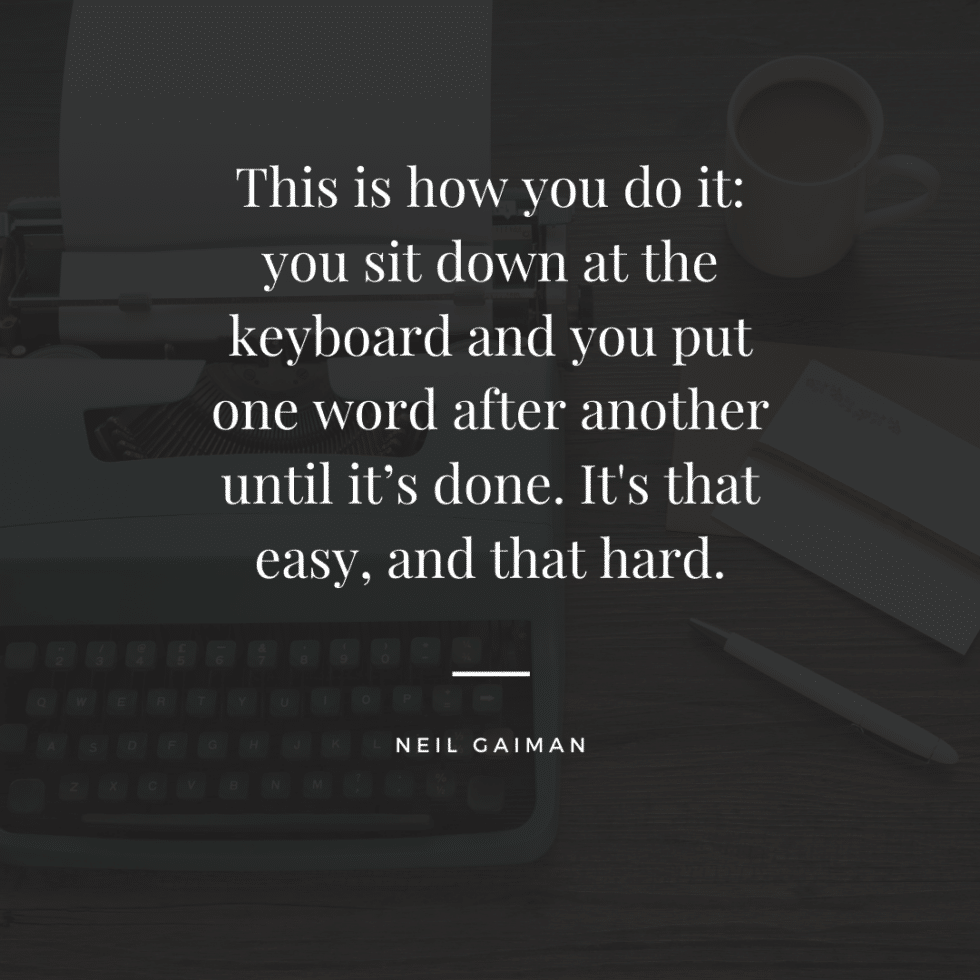
In the words of Neil Gaiman, an English author of short fiction, novels, comic books, audio theatre, and screenplays – ‘This is how you do it: you sit down on the keyboard, and you put one word after another until it’s done. It’s that easy and that hard.’